
Categories
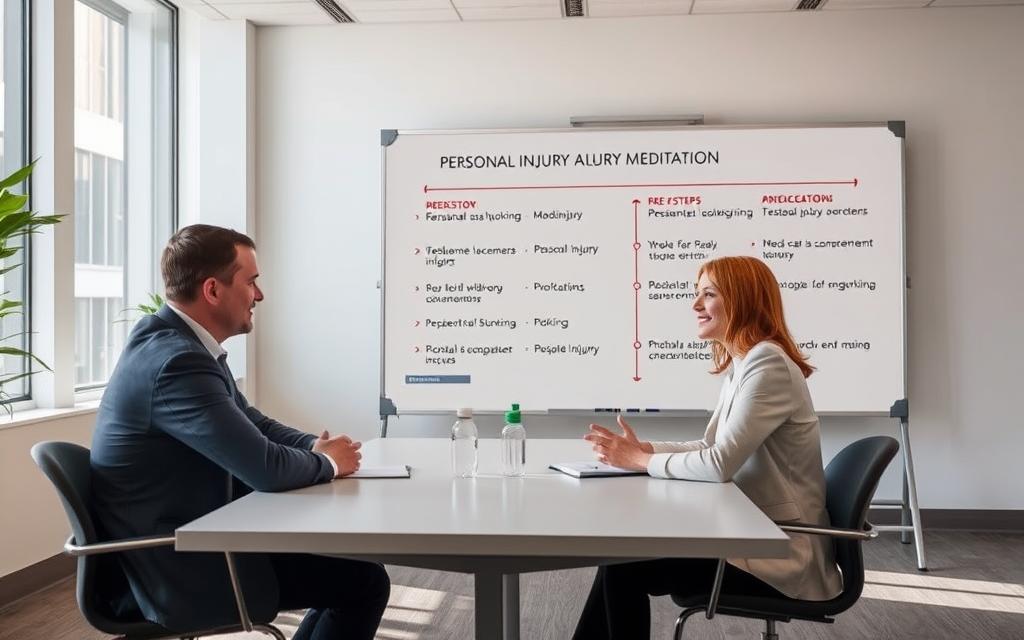
Ever wondered why some personal injury claims take years? Others settle fast. What secrets speed up injury settlements?
Personal injury mediation is a smart way to solve legal fights without court. It helps victims get fair pay by working together with insurance and others.
Understanding the mediation process is key. It can cut down legal costs and stress. Plus, it might make things move faster than long court battles.
Personal injury claims can be very hard and costly. They take a lot from you emotionally and financially. Mediation is a way to solve these problems without going to court.
Mediation is when a neutral person helps both sides find a deal. It’s different from court because it’s about working together to solve problems.
Mediation is better than going to court in many ways. It lets you have more control over the outcome. You don’t have to rely on a judge’s decision.
| Mediation Characteristics | Litigation Characteristics |
|---|---|
| Collaborative problem-solving | Adversarial confrontation |
| Faster resolution | Lengthy court proceedings |
| Lower cost | Expensive legal fees |
| Flexible outcomes | Rigid judicial decisions |
Choosing mediation can make things easier. It can save time and money. It also helps keep relationships strong while finding good solutions.
Understanding personal injury compensation can be hard. Mediation is a way to solve legal problems without going to court. It helps victims know what to expect and aim for a fair deal.
Mediation is a way to solve disputes without going to court. It lets injured people play a big role in getting compensation. The process has several steps to help everyone talk and find a solution they can agree on.
A mediator is a neutral person who helps guide the process. Their main jobs are:
Unlike judges, mediators don’t make final decisions. They help people find ways to agree on compensation. This might not be possible in court.
Knowing how long mediation takes is key for those in a personal injury claim. The time can change a lot based on different things. Mediation can last from a few hours to days, helping to solve legal problems.
How long mediation takes depends on the case’s details. Important things that affect the time include:
Every personal injury case is different. Straightforward claims might resolve in a half-day. But, complex cases could take days or weeks. How willing the parties are to work together also matters.
Most mediation sessions last 4-8 hours. Lawyers and mediators work hard to help everyone talk well. Clients should be ready for long talks and stay patient.
Things like medical issues, insurance, and injury details can change how long it takes. Lawyers can help set good time expectations for these talks.
Handling personal injury claims can be tough. But, getting ready for mediation can really help. Knowing what to do and having the right papers are key steps.

Before mediation, gather all important documents for your case. This makes the process smoother and shows the extent of your damages.
Mediation is a structured way to find a solution. Be ready for talking and maybe some give and take.
| Stage | Description |
|---|---|
| Opening Statements | Each side shares their view of the claim |
| Discussion | The mediator helps talk and find possible solutions |
| Negotiation | Everyone looks for ways to settle and talk about money |
| Resolution | They agree on something or try something else |
Being ready and working together can lead to a good mediation. The aim is to find a fair deal that helps the injured person.
Planning and coordination are key in the mediation process. Scheduling a mediation session is a big step in solving personal injury claims. The time it takes can change based on several important factors.
The first step is getting everyone to agree. This usually means:
Mediation sessions are set in specific times to work well. Most last from half a day to a whole day. Personal injury mediations often need 4-6 hours. This gives enough time for talks and finding a solution.
Everyone should be open to change during mediation. Some cases might need more than one session to find an agreement.
Going through personal injury mediation can be tough. Many things can make it take longer. Knowing what these are helps everyone get ready better for legal fights.
Not talking well is a big reason for delays. When people can’t share important info or talk openly, things slow down. Some big problems with talking include:
Some cases need more time because they are very complex. Complicated legal disputes often have many parts that make things take longer:
Mediation needs patience, good preparation, and a desire to solve problems. By knowing about possible delays, everyone can find ways to keep things moving.
Personal injury claims can be solved in many ways. Mediation is popular, but there are other paths too. These include legal disputes and injury settlements.
People dealing with legal issues have many options. Each one has its own benefits, depending on the case.
Going to trial might be good in some cases. This is when:
There are many ways to settle legal issues:
| Settlement Method | Key Characteristics | Potential Outcome |
|---|---|---|
| Arbitration | Private hearing with neutral third party | Binding decision |
| Direct Negotiations | Attorneys negotiate without formal mediation | Potential faster resolution |
| Structured Settlement | Compensation paid over time | Guaranteed long-term payments |
Choosing the right approach needs careful thought. It depends on the case and money involved.
Insurance companies are key in personal injury mediation. They often decide on injury compensation. Their role can change how long and what the outcome of mediation is.

Knowing how insurance companies work helps accident victims. It makes them better at personal injury mediation.
Insurance companies’ ways can change how long mediation takes. Important things that affect it include:
Insurance adjusters are very important in mediation. They usually try to:
| Adjuster Role | Mediation Impact |
|---|---|
| Initial Claim Assessment | Helps set the first settlement range |
| Documentation Review | Checks if injury claims are valid |
| Negotiation Approach | Affects how mediation goes |
To do well in personal injury mediation, you need to know insurance company strategies. Being prepared and having clear documents can help a lot.
Handling personal injury claims is hard. That’s why you need a good lawyer in mediation. They help you through tough legal fights. They make sure your rights are safe during talks.
Having a lawyer in mediation is very helpful. They bring many benefits:
Lawyers who deal with personal injury claims know a lot. They figure out how much money you might get. They think about medical costs, lost work, and future problems.
It’s best to talk to a lawyer right after you get hurt. Do this before mediation starts. This way, your lawyer can get all the facts. They can also get ready to negotiate well.
Remember: The right lawyer can really change how your claim goes.
Personal injury mediation is a key step in solving legal disputes. It offers many ways to find injury settlements through talking things out. Knowing what might happen helps everyone make better choices.
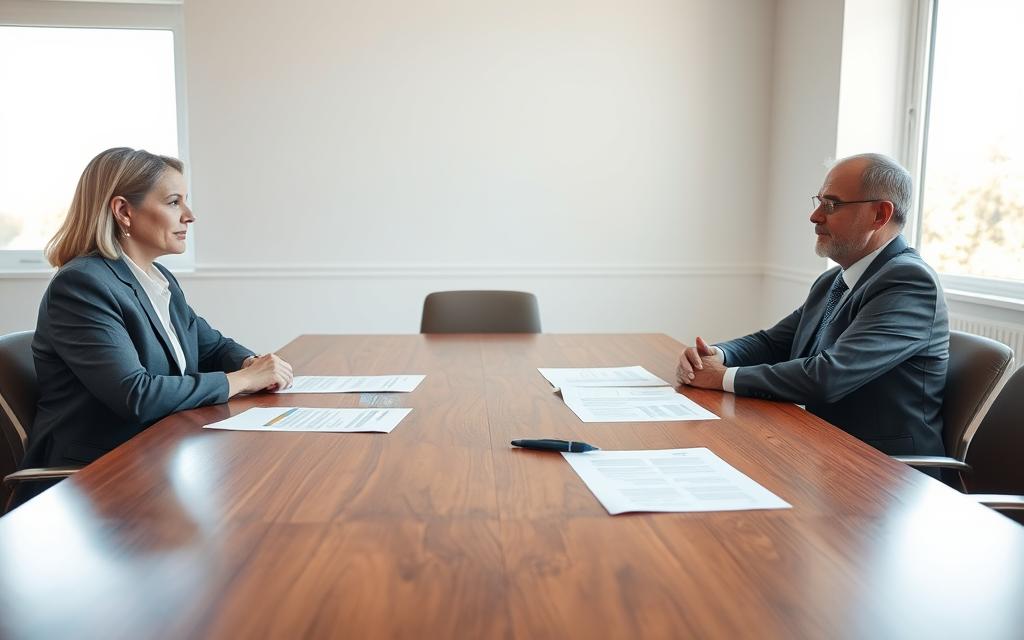
In personal injury mediation, people look for ways to agree on things. They might find:
Good mediation often leads to fair injury settlements. These cover immediate and future needs. People can talk about paying for medical costs, lost wages, and pain and suffering.
| Mediation Outcome | Typical Characteristics |
|---|---|
| Full Settlement | Complete resolution of all claim aspects |
| Partial Agreement | Resolving specific claim components |
| Conditional Settlement | Future payments or staged compensation |
If mediation doesn’t work, there are other ways to go. People can keep talking, try other ways to solve disputes, or go to court. Not getting an agreement right away doesn’t mean it’s over.
Getting help from a lawyer is very important. They guide people through tough talks and help make smart choices about settlements.
After mediation, knowing what to do next is key for injury settlements. The outcome of mediation can vary. It depends on if an agreement is made.
If mediation is successful, important steps must be taken to seal the deal:
Personal injury claims need careful paperwork after mediation. The agreement should include:
If mediation doesn’t work, other ways to solve the issue must be explored:
| Option | Description |
|---|---|
| Continued Negotiation | Talking more between lawyers |
| Arbitration | A special way to solve disputes |
| Litigation | Going to court to settle claims |
Legal experts say it’s important to think about each option’s risks and benefits.
Personal injury mediation is tough on accident victims. It can make them feel stressed, anxious, and vulnerable. It’s key to understand and handle these feelings to get through the mediation.
Accident victims feel many emotions during mediation. These feelings can make it hard to talk clearly and make smart choices.
There are ways to manage stress during mediation:
Having a strong support network is vital for mediation participants. Emotional resilience comes from:
Mental health experts say it’s important to find ways to stay emotionally balanced. By focusing on mental health, people can handle negotiations better.
Understanding the money side of personal injury claims is key. Mediation is cheaper than going to court. It helps accident victims get injury compensation without spending a lot.
How much mediation costs depends on a few things. Usually, it’s cheaper than going to court.
It’s important to think about the money side of mediation. Here’s a comparison to show the savings:
| Expense Category | Mediation Costs | Litigation Costs |
|---|---|---|
| Legal Representation | $2,000 – $5,000 | $10,000 – $50,000 |
| Total Dispute Resolution | $3,000 – $7,000 | $30,000 – $100,000 |
| Time Investment | 1-3 months | 1-3 years |
Mediation can cut down on both money and emotional costs of personal injury claims. It makes solving disputes faster. This can save thousands of dollars and months of stress.
Going through personal injury mediation needs careful planning and realistic hopes. How long it takes can change a lot. This depends on how complex the case is, how willing both sides are to talk, and how much info they have.
Being well-prepared and clear in talking is key to success. Stay patient and keep your eyes on a fair deal. Some mediations wrap up fast, but others might need more time to agree on something.
Time is very important in personal injury mediation. You want to settle fast but also make sure you have all the facts. Having good lawyers can make things go smoother and get you more money.
Even if mediation doesn’t settle your case, it’s a big step. Keep talking openly, write down everything, and stick to your goals. This will help you the most during your mediation journey.
