
Categories

Ever thought recording a chat could get you in trouble? Audio recording laws are tricky. Is it okay to record talks, or is it risky?
Can you legally record talks? It depends on where you are, the talk’s context, and if everyone agrees. The U.S. has many rules about recording sounds.
In most places, you can record if you’re part of the talk. Federal law says it’s okay if one person agrees. This makes recording easier for some.
But, knowing the rules is key. Each state has its own rules. These rules can change if you record talks.
Wiretapping laws are complex. They deal with recording talks through tech. Each state has its own rules.
Recording talks has two main rules: consent and where it’s done. Most states have clear rules for recording talks.
Recording talks means catching what people say. This can happen in:
Getting consent is key. It decides if you can record without everyone’s okay.
Recording laws vary across the U.S. Some states let you record with just one person’s okay. But 11 states need everyone’s agreement.
| Consent Type | Number of States | Key Characteristics |
|---|---|---|
| One-Party Consent | 38 | Recording allowed with consent from at least one participant |
| Two-Party Consent | 11 | All participants must provide explicit consent |
Knowing these laws is important. It helps people and groups avoid legal trouble when recording talks in different places.
Understanding federal wiretapping law is key to recording phone calls legally. The U.S. has clear rules to protect privacy and allow some recordings.
The Federal Wiretap Act sets rules for recording talks. It’s a big law that helps guide legal recording practices nationwide.
The Act gives important rules for recording talks. It sets basic rules for legal tapping into conversations. There are special cases where recording is okay:
The one-party consent rule is a big exception in federal law. If one person in a talk agrees to record, it’s legal under federal rules.
Important things to remember for legal recording are:
Even with federal law, it’s important to watch out for state rules. They might have stricter rules for recording phone calls legally.
Understanding state recording laws can be hard. One-party consent recording makes it easier to record talks in the U.S.
Most states follow the federal one-party consent rule. This means you can record talks if you’re part of them. You don’t need to tell others.
Thirty-eight states and Washington, D.C. allow one-party consent recording. Some well-known states include:
Even in one-party consent states, be careful. At least one person must agree to the recording. This can be the person recording.
| State Type | Consent Requirement | Legal Consideration |
|---|---|---|
| One-Party Consent | One participant consents | Legally recordable by participant |
| All-Party Consent | All participants consent | Requires explicit permission |
Even in one-party consent states, respect privacy laws. Sharing recordings without permission can cause legal trouble. This includes civil and criminal penalties.
Understanding consent laws for audio recording can be tricky. This is true in states with strict two-party consent rules. Knowing these rules is key for legal and right communication.
About 25% of US states have all-party consent laws. This makes recording talks more strict. In these places, you need all participants to agree before recording.
The following states need two-party consent for recording talks:
In these states, you must get consent from all before recording. The usual way is to tell everyone clearly before you start recording.
Breaking these laws can lead to big legal problems. You could face criminal charges, fines, or even jail. So, it’s very important to be careful when recording in these places.
These strict laws show how vital it is to know the local rules. Always get the right consent before recording any talk.
Recording talks in public places has its own set of rules. These rules can change how legal it is to record sounds. Some rules say you need permission to record, but there are times when you don’t.
In emergency situations, you can record without asking. California Penal Code § 263.5 says it’s okay to record if it keeps you or others safe.
At work, recording talks might be allowed. Companies might let you record for training or to check quality. Check your work rules to know what’s okay.
Knowing when to record without asking is tricky. Always check the laws in your area. If you’re not sure, talk to a lawyer.
Recording talks can be tricky. You need to know the laws about recording phone calls and in-person talks. These laws change a lot from state to state.
Recording talks has its own set of rules. Phone calls and face-to-face talks might seem the same. But, their legal rules can be very different in each place.
It’s important to know the laws about recording talks in your state. Consent rules can be tricky if you don’t follow them right.
In 38 states, you only need one person’s okay to record a phone call. But, 12 states need everyone’s okay to record a call.
Some states have their own rules:
Always make sure you have clear consent to record talks. Knowing your state’s laws can help avoid legal problems and keep you safe.
Understanding workplace recording laws can be tricky. Both employees and employers face challenges. The rules keep changing with new technology.
Workplace policies on recording talks are very important. They balance privacy and openness. Employers need to protect their business. At the same time, employees have rights under the law.
Employers can make rules about recording at work. They should think about a few things:
Employees also have rights when it comes to recording at work. Important points include:
Courts have different views on recording at work. In Shalagin v Mercer Celgar Limited Partnership, secret recordings could lead to firing if against company rules. But, the Rooney v GSL Chevrolet Cadillac case looked at things more carefully.
To understand recording laws at work, you need to know both sides. Good communication and clear rules are key to handling recording issues.
Journalists face a tricky legal world when they record audio for news. Legal audio recording needs a deep grasp of privacy laws and rules about recording. These laws help protect both sources and the public’s right to know.
The First Amendment gives journalists a lot of protection. But, these rights have limits. About 49 states have laws or court decisions that keep reporters from revealing who told them secrets.
Journalists must walk a fine line between doing their job right and following the law. They need to think about:
Shield laws are very important for journalists. They let reporters keep their sources’ identities safe. But, these laws differ from state to state, with some being stronger than others.
| State Shield Law Coverage | Extent of Protection |
|---|---|
| State Court Protection | Over 40 states provide protection |
| Federal Protection | Limited and inconsistent |
| Source Confidentiality | Varies by jurisdictional interpretation |
Journalists must always be careful about the law. They need to know how privacy laws and recording rules affect their work.
It’s important to know the legal issues of recording without consent. Breaking recording laws can cause big problems. These problems go beyond just a warning.
So, when is recording illegal? It depends on the laws in your state. Not following these laws can lead to big fines and jail time.
Recording without permission can cost you a lot of money. In Texas, for example, you could face:
But the criminal penalties are even worse. In Texas, for instance:
Remember, each illegal recording can lead to a separate charge. So, recording someone ten times could mean ten charges. This greatly increases the legal risks.
Recording talks can be tricky. It’s important to know the rules in each place to avoid legal trouble.
Recording talks without saying okay first changes a lot based on where you are. Each place has its own rules about recording.
In personal settings, there are key things to think about:
Work places have their own rules for recording talks:
| Context | Recording Legality | Consent Requirements |
|---|---|---|
| Workplace Meetings | Varies by employer policy | Often requires explicit permission |
| Client Interactions | Typically requires notification | Explicit consent recommended |
| Professional Consultations | Dependent on specific profession | Often requires mutual agreement |
Some situations need extra care when recording:
Always check local laws and talk to a lawyer to make sure you’re okay recording talks in different places.
Digital technology has changed how we record talks. It has made laws about hidden recording and watching others tricky. Now, it’s easier than ever to record sounds, which raises big privacy and legal questions.
New tools have made recording easier. Smartphones, smartwatches, and apps can now record talks like never before. This has changed how we think about recording.
New recording tech brings big legal questions. Surveillance recording laws differ a lot in different places. This makes it hard for people and groups to follow the rules.
Important legal points include:
It’s key to know the legal side of digital recording. With 38 states okaying one-party consent and 12 needing all-party consent, users must be careful. They need to understand the tech and legal issues.
Recording calls without consent needs careful steps. Knowing the rules can keep you safe from legal trouble.
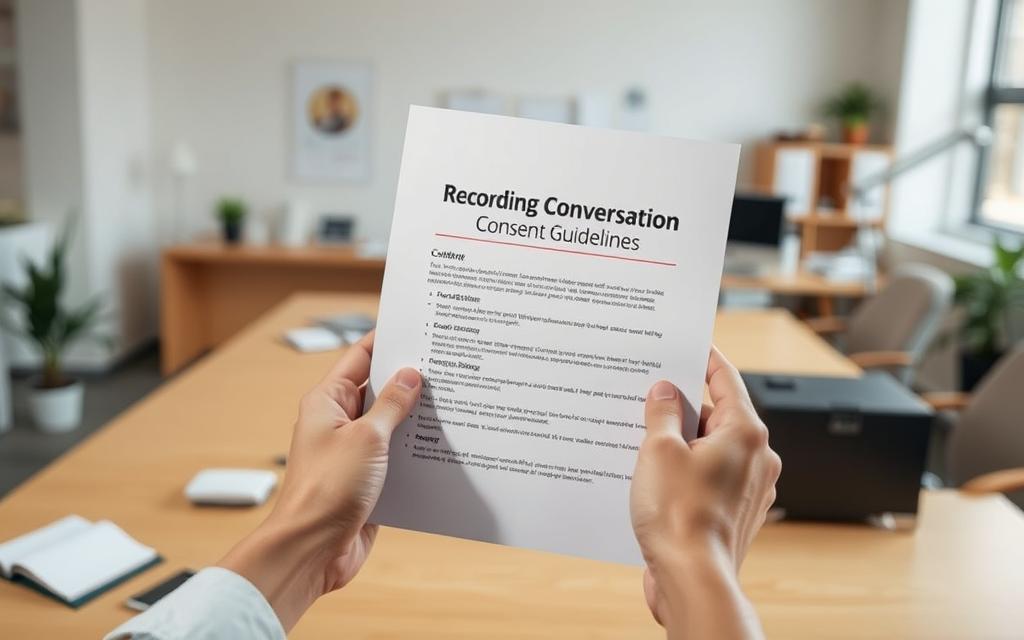
Getting consent is key for legal safety. Verbal consent works, but written proof is stronger. With 38 states needing only one person’s consent, knowing your laws is vital.
Keeping good records of recordings is important. Think about making a consent form. It should have:
Remember, 72% of U.S. states only need one person’s consent. But, each state has its own rules. Always be open and respect privacy when recording.
Understanding legal audio recording can be tough. Lawyers who know about privacy law can guide you. They help you know the rules about recording talks.
Looking for legal help? Talk to lawyers who know about privacy. Sites like UpCounsel have lawyers with lots of experience. They explain the rules about recording, which change in each place.
There are groups that help with legal problems from recording talks. The American Civil Liberties Union (ACLU) has resources for privacy. Local legal aid groups offer free or cheap help to understand your rights.
It’s important to know about new laws on watching people. Laws like the Electronic Communications Privacy Act (ECPA) and the Foreign Intelligence Surveillance Act (FISA) affect recording talks. A lawyer can help you follow these laws and avoid trouble.
